
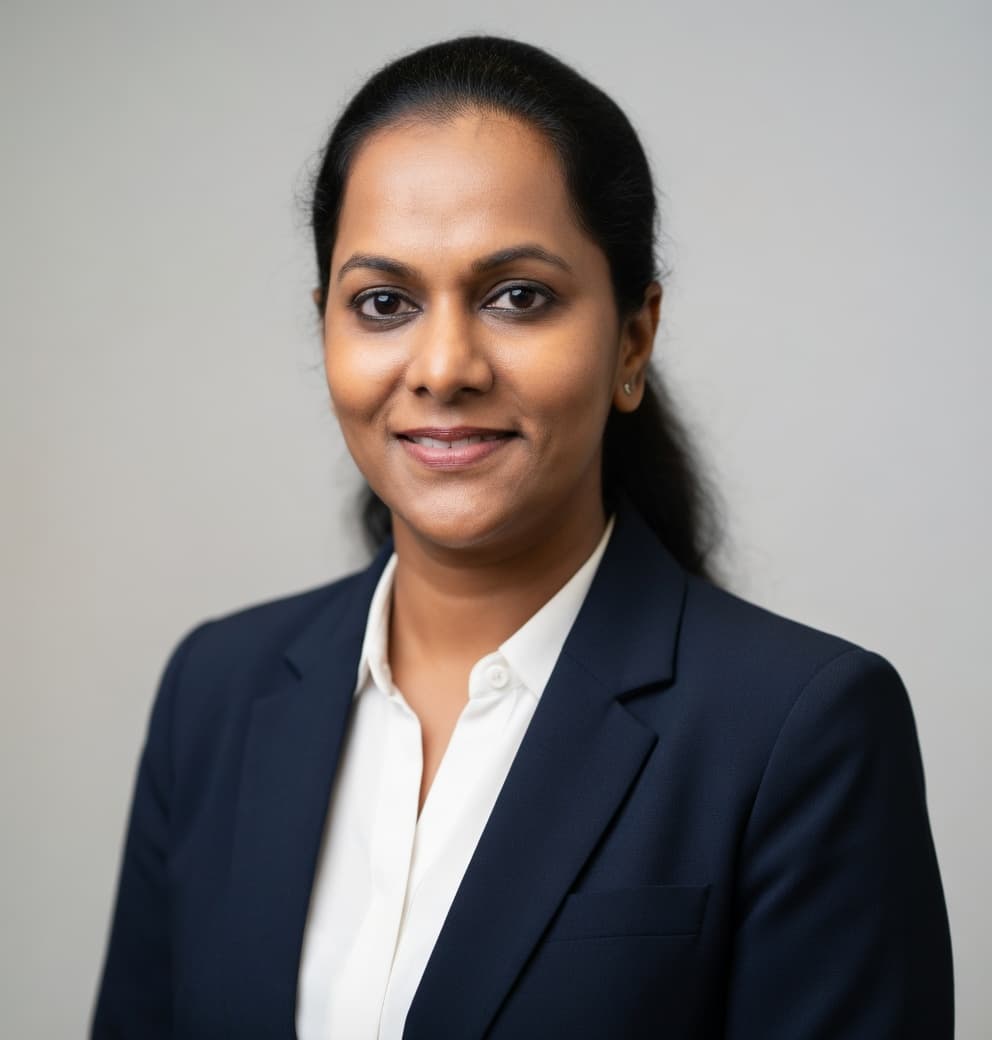
“Data pipelines are just trust — between you, the data, and whoever reads the dashboard at 6am.”
Nandhini Kandasamy, Senior Finance Manager
- 01
What's the biggest shift in how you work over the last year?
The close process changed most for me. We used to spend the last week of every month in manual reconciliation — pulling actuals from five systems, matching them against budget, chasing down variances. Now that workflow runs on agents that pull, reconcile, and flag variances automatically. I review the flagged items, not the entire reconciliation. The close is three days shorter and my team's stress level in that last week is measurably lower.
- 02
Walk me through a problem you solved using AI that you couldn't have tackled the same way before.
We had a cost center with persistent overspend that nobody could explain cleanly. I ran an LLM analysis over eighteen months of purchase order data, expense reports, and GL entries for that cost center. It identified a pattern — a recurring set of vendor invoices being categorized inconsistently across quarters, masking the real cost structure. Once we fixed the categorization, the overspend disappeared. The actual spend was fine; the accounting was wrong.
- 03
What do you wish you'd known before joining?
That finance here is expected to have opinions about the business, not just about the numbers. In most finance roles, you report what happened. Here, you're expected to synthesize what it means and what the company should do about it. That's a bigger seat at the table and a higher expectation. I would have prepared differently if I'd known how much the role expects you to influence decisions, not just inform them.



See open seats.
Building across engineering, product, data, sales, ops, finance, and people. Every role is an Operator role.
We get people offline through quality local experiences at great value. That's still the mission. Everything above is what it takes to deliver it in 2026.