
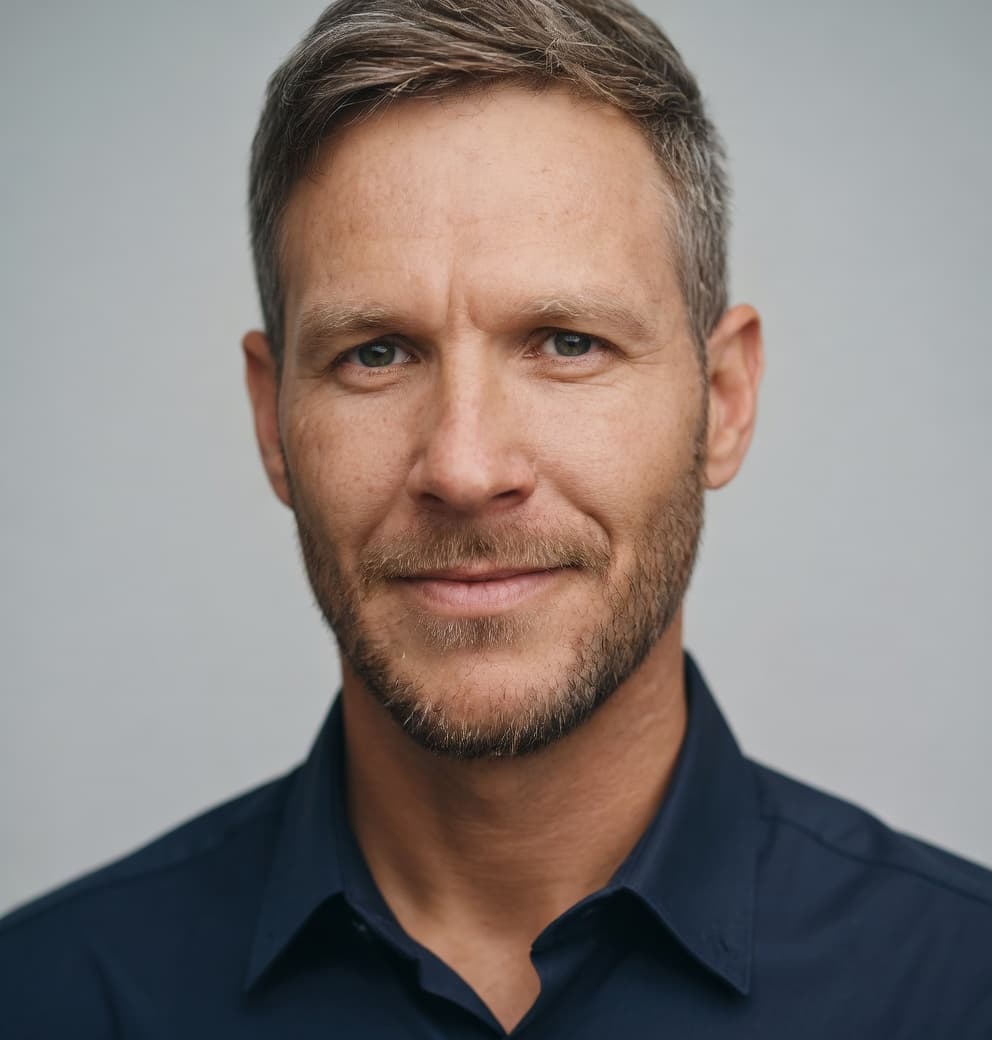
“I'm here to use complexity as an advantage, not let it become an excuse for missing deadlines.”
Viktor Bezdek, VP of Software Engineering
- 01
Can you tell us how you ended up at Groupon and what you work on?
I joined Groupon to make what customers see and touch actually work well — fast, modern, and clean. I run consumer engineering for web and mobile across multiple regions, and I hate when slow delivery gets blamed on process and when process slows down delivery. I've spent my career building products with a systems mindset, and lately I've been pushing hard on AI to speed things up. I'm here to use complexity as an advantage, not let it become an excuse for missing deadlines.
- 02
When everything feels important, how do you decide what truly deserves your team's time and attention?
I ask four questions before committing my team: Does it move a number we care about? How fast can we prove it works? What are we not doing instead? Does it fix a recurring problem? If something doesn't pass this filter, it's probably a distraction even if it sounds important. Every yes is a no to something else.
- 03
What's one example where saying no or simplifying the scope led to a better outcome?
Last year we nearly killed our new app because we were measuring it wrong. For nine months, every metric showed the new app underperforming the old one. Turns out we were comparing all users on the new app — mostly new signups — against all users on the old app, heavily weighted toward established customers. Once we isolated just new user cohorts and compared those, the picture flipped. The new app was actually performing better. We'd just been looking at it wrong the whole time.
- 04
You've been pushing a very hands-on AI-first way of working. What gap were you trying to close?
I've been playing with AI since before ChatGPT, and I'm convinced it's going to change what engineering work looks like. I use AI heavily in my own workflow — it gives me operational visibility into what's happening across teams that I couldn't get otherwise. But honestly my primary motivation is that I worry about people on my teams staying employable. The market is moving fast. Engineers who don't adapt, who don't learn new tools, who don't expand beyond their narrow specialty are going to struggle. I'd rather show people what's possible now than watch them get caught flat-footed later.
- 05
What's one thing about how you work that most people wouldn't guess from your title alone?
Probably that I still do a lot of the work myself. Not to micromanage, but because I genuinely can't lead in this space from a distance. Most evenings, after my wife and son go to sleep, I'm building something — an internal tool, an agent workflow, a prototype I can demo to engineers the next day. I think you can't credibly push a team toward AI-native thinking while staying abstract about it yourself. I show up to technical discussions and actually participate. I share what I'm learning. I demo things I built over the weekend.


See open seats.
Building across engineering, product, data, sales, ops, finance, and people. Every role is an Operator role.
We get people offline through quality local experiences at great value. That's still the mission. Everything above is what it takes to deliver it in 2026.